Your cart is empty
Tax included and shipping calculated at checkout

Cart Error
Drawer menu
Your cart (0)
Tax included and shipping calculated at checkout

Denbigh Castle is a staffed Cadw site on Castle Hill, above the town of Denbigh in the Vale of Clwyd. It is well signposted, there is a free car park by the gate, and you can walk into the great gatehouse for free before paying to explore the grounds. Allow at least an hour. Here is what you need to know before you go, from my own visit in October 2026.
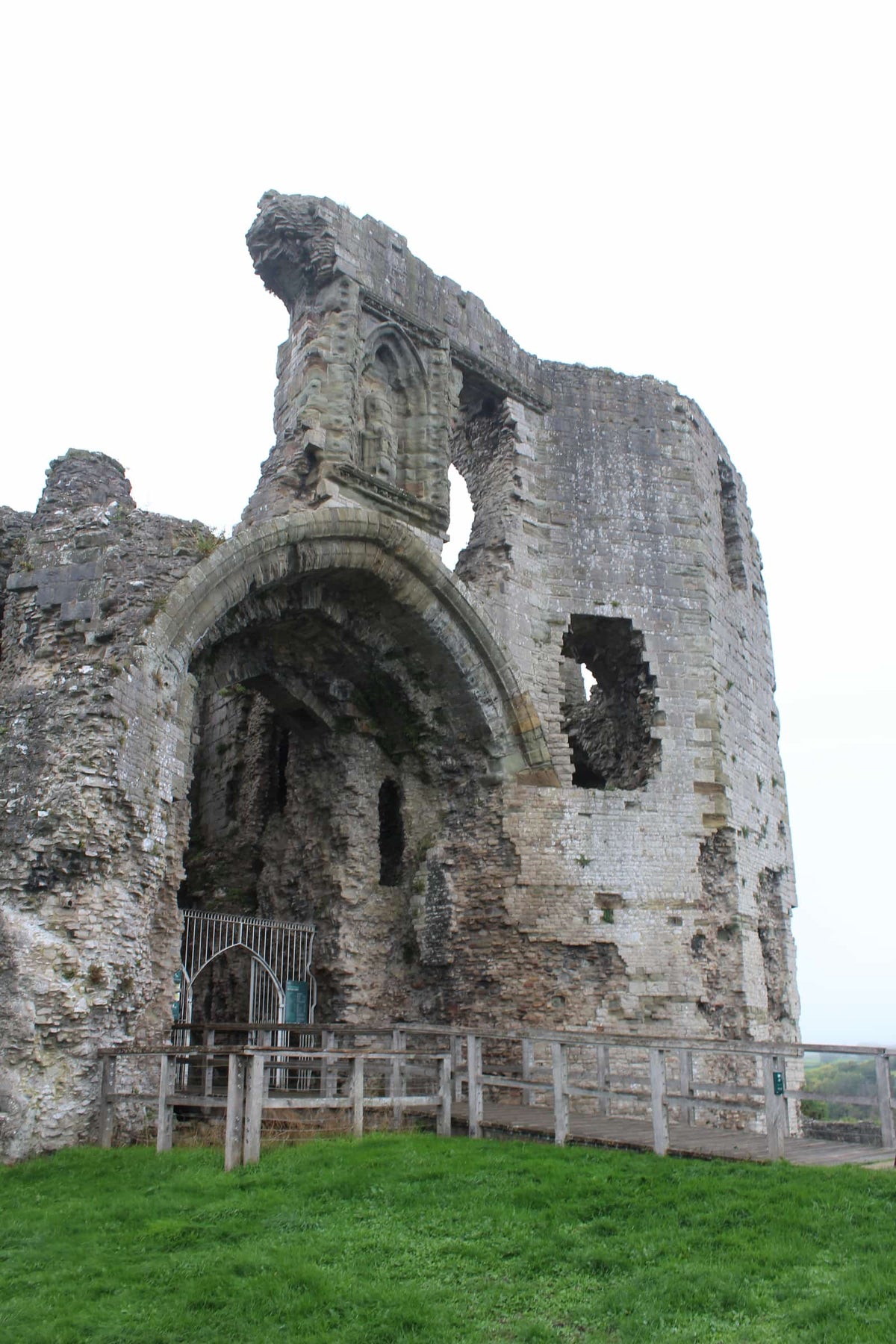
Yes. Denbigh is one of the most impressive castles in north-east Wales, and it is far quieter than the great royal castles along the coast. The three-towered great gatehouse is the showpiece, and you can walk into it for free. Inside the walls, the grassy inner ward is ringed by towers, and the views from Castle Hill across the Vale of Clwyd to the Clwydian Hills are superb on a clear day. I visited on a wet, misty October day and still spent well over an hour there.
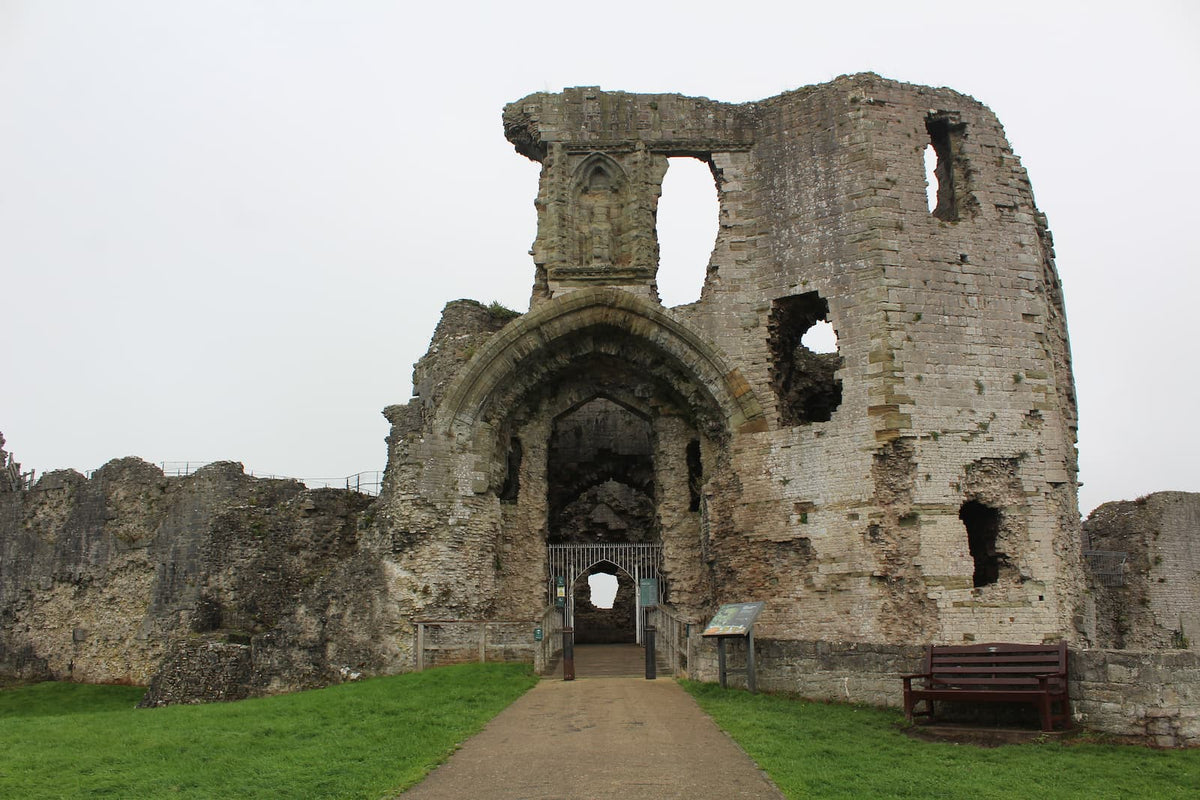
The castle stands on Castle Hill, at the top of the old walled town of Denbigh in Denbighshire. Cadw gives the address as Castle Hill, Denbigh LL16 3NB, and the what3words address is ///valued.rejoiced.strapped. By road, Cadw recommends approaching Denbigh on the A525, A543 or B5382. Once you are in Denbigh, the castle is well signposted from the town centre, so follow the brown signs rather than relying on the postcode alone. Use the map below for directions.
I parked in the free car park right next to the castle, and from there it is only a short walk to the entrance. Cadw describes it as a gravelled car park for about 15 cars, about 100 metres from the castle entrance, with one dedicated accessible space. The road up to it is narrow, so take it slowly and be ready to give way.
The car park also has two electric vehicle charge points (22kW, Type 2). There is a charge for using them, but parking itself is free. If the car park is full, there is parking in the town centre, but be warned that the walk back up to the castle is very steep.
Denbigh can be reached by bus, but it takes some legwork. Cadw says the nearest bus stop is about 300 metres from the castle, on routes 151 and 152 between Rhyl and Denbigh. From the town centre, the walk up to the castle is very steep, so allow extra time and wear sensible shoes. The nearest railway station is Abergele, on the Llandudno to Chester line, about seven and a half miles away. Cyclists can use National Cycle Network Route 5, which Cadw puts about 11 miles away. Traveline Cymru (0800 464 0000) can check the latest bus times.
These details were checked on the Cadw Denbigh Castle page on 17 October 2026. Opening days change with the season, so check before you set off.
The great gatehouse is free to walk into, but you need a ticket for the castle grounds. Cadw's prices from 1 September 2026 to 31 March 2027 are:
You can buy tickets on arrival or book online for a 5% discount. Cadw also offers £1 tickets for people on Universal Credit and other named benefits, and 10% off for Blue Light Card holders and the Armed Forces (not online). I used my Cadw membership, which covers entry to Denbigh and every other staffed Cadw site, and is well worth it if you plan to visit several castles in a year.
Accessibility at Denbigh is fair. A path leads from the car park up to the castle, and inside, the inner ward is largely flat. Cadw rates the terrain as Level 1, Accessible, with a slight incline from the car park and the castle bridge, which can be slippery when wet. Paths around the monument are gravel, with some cobbles, which can be hard going for some mobility scooters.

Cadw welcomes dogs on short leads on the ground floor levels of the site. I didn't spot a notice about dogs on my visit, so if you are unsure about any part of the castle, ask the staff at the visitor centre.
Denbigh is a big site, and it rewards a slow walk round. On the ground you will find:



As a staffed Cadw site, Denbigh has a visitor centre with toilets and baby changing, a gift shop selling the guidebook, free Wi-Fi and bike storage. Cadw doesn't list a café, so bring a drink or plan to eat in the town.
Come on a clear day if you can. Castle Hill looks out across the whole Vale of Clwyd to the Clwydian Hills, and the views are one of the best things about Denbigh. On my visit the weather was bad and the vale was lost in mist, which was atmospheric but meant missing the view. Remember that the castle is closed on Tuesdays and Wednesdays in summer, and open only Friday to Sunday in winter.

Denbigh was a stronghold of the Welsh prince Dafydd ap Gruffudd until Edward I's army took it in October 1282. Edward granted the lordship to Henry de Lacy, Earl of Lincoln, and work on the new castle and its walled town began that same month. In the Welsh rising of 1294 the half-built castle was captured, and the rebuilding that followed gave Denbigh its higher walls and its great gatehouse. The castle held out against Owain Glyndŵr in 1400, and in the Civil War Colonel William Salesbury defended it for the king for six months before surrendering on 26 October 1646. It was slighted in about 1660.
Read the full history of Denbigh Castle

Denbigh town is worth a look around after the castle. Cadw cares for three more sites within a few minutes' walk: St Hilary's Chapel, whose tower is all that survives of the medieval town church; the Earl of Leicester's Church, the shell of the great Elizabethan church Robert Dudley never finished; and the Denbigh Town Walls, with the Burgess Gate and the Goblin Tower.
Further afield, Ruthin Castle is a short drive up the Vale of Clwyd, and our guide to visiting Rhuddlan Castle covers another Cadw castle a short drive down the vale towards the coast. Nearer the sea, our guides to visiting Prestatyn Castle and visiting Ewloe Castle cover two very different castles.
Before you set off, download our free Denbigh Castle illustrated guide, browse all our free illustrated castle guides, or see more castle visitor guides.
Yes. There is a free car park right beside the castle, with room for about 15 cars and one accessible space, and the entrance is a short walk away. The lane up to it is narrow, so take it slowly. It is well signposted from Denbigh town centre.
Partly. You can walk into the great gatehouse free of charge, but Cadw charges admission to the castle grounds. Cadw members get in free, and you can buy tickets on arrival or save a little by booking online.
Allow at least an hour for a proper look around the gatehouse, the inner ward, the well and the wall walk, and longer if the weather is clear and you want to take in the views.
Partly. A path leads up to the castle and the inside is largely flat, with gravel paths around the inner ward, but there is a slight incline, a bridge that can be slippery when wet, some cobbles, and steps up to the wall walk. Cadw publishes a detailed access guide.
Yes. Cadw welcomes dogs on short leads on the ground floor levels of the site. We didn't spot a notice on our visit, so ask at the visitor centre if you are unsure.
Yes, with some effort. Buses run between Rhyl and Denbigh, and Cadw says the nearest stop is about 300 metres away, but the walk up from the town centre is very steep. The nearest railway station is Abergele, about seven and a half miles away.
Visitor details last checked on 17 October 2026. Opening times, prices and access can change, so check with Cadw before you travel.
Images may be reused with a credit link to historiesandcastles.com. See our image licence.


Published: 17 October 2026 | Last Updated: 17 October 2026

Regular podcasts by Histories and Castles to help you get a deep dive understanding of histories events and figures.


