Your cart is empty
Tax included and shipping calculated at checkout

Cart Error
Drawer menu
Your cart (0)
Tax included and shipping calculated at checkout
Inspired by the events behind the upcoming film The Uprising, releasing in October? Go beyond the big screen and uncover the extraordinary true story that changed medieval England forever.
Sign up today and instantly receive our beautifully illustrated Peasants' Revolt (1381) Infographic packed with fascinating facts, key figures, major battles, and the lasting legacy of one of history's most dramatic rebellions.
Enter your email below to get your FREE infographic instantly.

William the Conqueror founded Battle Abbey as an act of penance for the bloodshed of the Conquest, insisting its high altar mark the exact spot Harold fell d...

Everyone remembers the battle. Few remember that Hastings only decided who would be king, not what kind of country England would become. Within twenty years,...

Textbooks call them defensive. Look at where they actually stood, in the middle of towns, over marketplaces, beside churches, and a different picture emerges...

Pickering Castle was built between 1069 and 1070, during or immediately after William I's harrying of the north. Its original timber motte and bailey was rai...

In medieval England, justice was shaped by both Crown and Church. Under Edward I, ecclesiastical courts governed marriage, morality and clerical cases, while...

In Edward I’s England, the medieval Church dominated education. Monastic and cathedral schools trained clergy and administrators, while universities such as ...

The Normans did not invent feudalism. What they did was take a looser Anglo-Saxon custom and turn it into an enforceable system, backed by a survey so thorou...

In 1071, one Anglo-Saxon rebel held out against the full might of William the Conqueror from a fortress of marsh and reed. Hereward the Wake's stand at Ely e...

William the Conqueror needed a lawyer, not a soldier, to remake the English Church. Lanfranc, a reluctant Italian scholar from Bec, spent nineteen years as A...

Riding on horseback with no maps, satellites, or database, William I's commissioners surveyed almost every manor in England within a single year, a pace no m...

William I combined castle building, feudal land grants, Church reform under Lanfranc, and the Domesday survey to control England. This article weighs which m...

Ninety eight Saxon houses were demolished in Norwich to clear space for a castle, while York, punished with two castles after repeated rebellion, still recor...
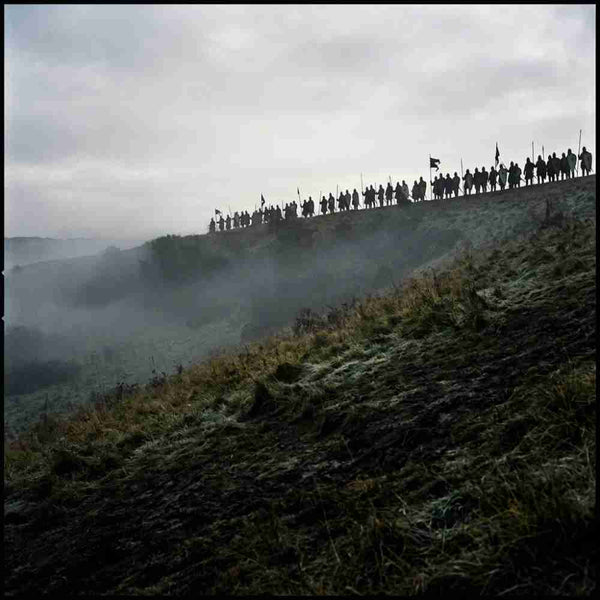
On 14 October 1066, Harold Godwinson went to Hastings as King of England and did not come back. What followed was not merely a change of ruler but the transf...


