Your cart is empty
Tax included and shipping calculated at checkout

Cart Error
Drawer menu
Your cart (0)
Tax included and shipping calculated at checkout


Use the guide below to help choose the best fit for your T-shirt. Measurements are provided in inches and may vary slightly within the stated tolerance.

In medieval England and Wales, the law was not a shield. It was a weapon, and it was rarely pointed in your favour unless you already held wealth, land, or standing before God and king.
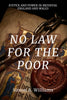
No Law for the Poor is an investigative account of how justice actually worked for ordinary people between the twelfth and fifteenth centuries. Not the version taught through royal charters and cathedral architecture, but the version experienced by the villein who could not read the writ served against him, the widow stripped of her inheritance the moment she remarried, and the accused who faced trial by ordeal because he had no coin for a proper defence.
Across seventeen chapters, this book traces the machinery of medieval law: manorial courts that answered to the lord rather than the crown, the doctrine of coverture that erased a married woman's legal identity, the forest laws that turned subsistence hunting into a capital offence, and the ecclesiastical courts that judged sin and debt with equal severity. It argues that access to justice in this period was not a right extended to all subjects, but a privilege rationed by class, gender, and proximity to power.
This is not a romanticised tour of medieval Britain. It is a case file, built from statute, court roll, and chronicle, on a system that called itself justice while serving the few.
Written for readers of medieval history, legal history, and social history who want the evidence behind the myth of a fair and orderly Middle Ages.
Format: Paperback | Publisher: Histories and Castles | Language: English