Your cart is empty
Tax included and shipping calculated at checkout

Cart Error
Drawer menu
Your cart (0)
Tax included and shipping calculated at checkout

King Edward II inherited one of the most powerful kingdoms in medieval Europe and squandered it through personal favouritism, military incompetence at Bannockburn, and political blindness. He was deposed in 1327 by his own wife and almost certainly murdered at Berkeley Castle soon after.
King Edward II, born in 1284, was a monarch who left a lasting mark on English history. The son of the formidable King Edward I, he had big shoes to fill. But his reign was anything but smooth. Here are 5 facts about his controversial relationships and military failures.
Edward II's life was a rollercoaster of ups and downs. Understanding King Edward II's life gives us a glimpse into a turbulent period in English history. His reign was fraught with political intrigue, military blunders, and personal scandals. But it's these very complexities that make his story so captivating.
Born on 25 April 1284, Edward II was the fourth son of King Edward I and Queen Eleanor of Castile. But don't let the "fourth son" bit fool you. He was the first of the couple's children to survive infancy, making him the heir apparent from a young age. Growing up, Edward was educated in the arts of war and governance, but he also had a keen interest in boating and manual labour, quite unusual for a royal!
When King Edward I died in 1307, Edward II was thrust into the limelight. At the age of 23, he was crowned King of England in a lavish ceremony at Westminster Abbey. But here's a fascinating fact: Edward II was so attached to his close friend and confidant, Piers Gaveston, that he broke tradition by allowing Gaveston to wear royal purple at the coronation. This act raised many eyebrows and set the stage for a reign filled with controversy.
Edward II's early years as king were anything but smooth sailing. He faced opposition from powerful barons, struggled with military campaigns, and was often criticised for his close relationship with Piers Gaveston. Despite these challenges, Edward II made some attempts at reform, including efforts to streamline the legal system and improve trade relations. However, these were largely overshadowed by his military failures and personal controversies.
Understanding Edward II's early life and ascension to the throne is crucial for grasping the complexities of the medieval English monarchy. His reign serves as a case study in the challenges and pitfalls that English kings often faced, from political opposition to personal scandals.
One of the most talked-about aspects of Edward II's life is his close relationship with Piers Gaveston. The two met when they were young and their friendship quickly blossomed into an unbreakable bond. Edward II was so fond of Gaveston that he even granted him the title of Earl of Cornwall, a move that didn't sit well with the English nobility.
Edward II's attachment to Gaveston was more than just a close friendship; it was a relationship that had political repercussions. The king's favouritism towards Gaveston angered the barons and led to political unrest. In fact, the barons were so displeased that they forced Edward II to exile Gaveston not once, but twice! Yet, the king always found a way to bring his friend back, further straining his relations with the nobility.
Despite the political turmoil, Edward II and Gaveston's friendship remained steadfast until the very end. Tragically, Gaveston was captured and executed by the barons in 1312, leaving Edward devastated. This event marked a turning point in Edward II's reign, leading to increased opposition and challenges.
The friendship between Edward II and Piers Gaveston had a profound impact on Edward's reign and the political landscape of England. It not only led to internal strife but also weakened the king's authority. Understanding this relationship is key to comprehending the complexities and challenges that marked Edward II's time on the throne.
One of the most defining moments of Edward II's reign was the Battle of Bannockburn in 1314. This battle was a pivotal event in the First War of Scottish Independence. Edward II led the English army against Robert the Bruce, King of Scots, in a clash that would go down in history for its dramatic outcome.
Edward II's army was larger and better equipped, but they were disastrously defeated. So, what went wrong? Poor strategy and overconfidence played a big part. Edward II underestimated Robert the Bruce and paid the price. The defeat at Bannockburn was not just a military failure; it was a blow to Edward II's prestige and authority.
The defeat had far-reaching consequences. It emboldened the Scots and weakened Edward II's hold on his northern territories. The loss also led to increased criticism from his own barons, further destabilising his reign.
The Battle of Bannockburn can be better understood in the context of Edwardian military architecture. Edward I, Edward II's father, had built formidable castles like Caernarfon to subdue the Welsh. These castles were marvels of military engineering but couldn't prevent Edward II's defeat at Bannockburn.
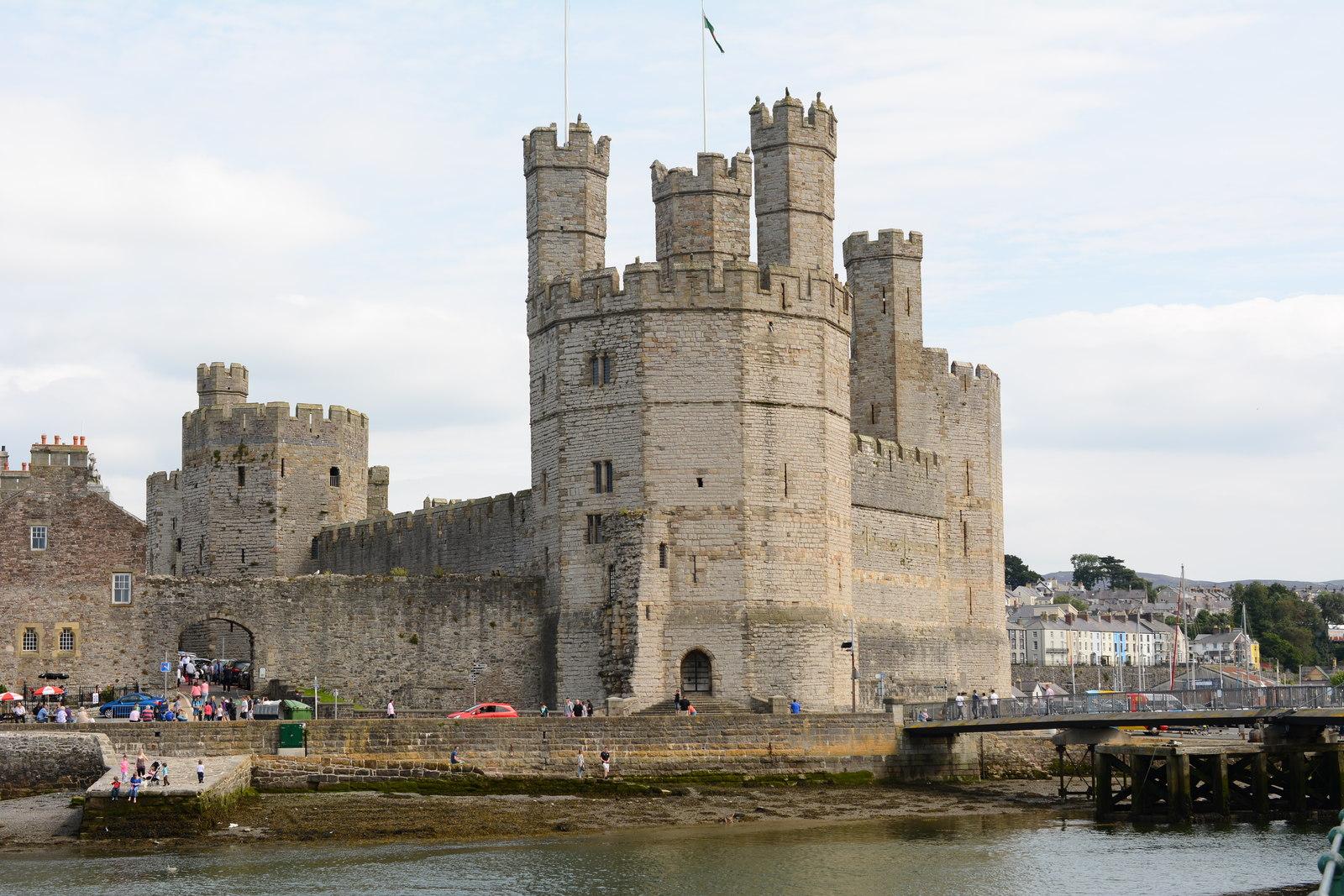
Edward II's reign was fraught with challenges, but none so dire as his eventual imprisonment. After years of political unrest and military failures, the king found himself at odds with his own wife, Queen Isabella, and her lover, Roger Mortimer. In a dramatic turn of events, Edward II was captured and imprisoned in Berkeley Castle in 1327.
While in captivity, Edward II was coerced into abdicating the throne in favour of his son, Edward III. This was an unprecedented move that shocked the nation. The abdication was not just a personal failure for Edward II; it was a moment that changed the course of English history.
Queen Isabella played a pivotal role in Edward II's downfall. Often referred to as the "She-Wolf of France," she masterminded the coup that led to Edward's imprisonment and abdication. Her actions were driven by a combination of personal grievances and political ambitions, making her a key figure in this dramatic chapter of Edward II's life.
Edward II's abdication had a ripple effect on the English monarchy. It raised questions about the divine right of kings and the extent to which a monarch could be held accountable for their actions. These questions were not new; they had been debated during the reign of Edward II's grandfather, King Henry III, but Edward's abdication brought them to the forefront once again.
Edward II's life was filled with twists and turns, but none so puzzling as the circumstances surrounding his death. Officially, he is said to have died in Berkeley Castle in 1327, where he was imprisoned. However, rumours and theories abound that he may have escaped and lived the rest of his life in exile.
According to historical records, Edward II died due to "a fatal accident," which many believe to be a euphemism for murder. The most popular theory suggests a rather gruesome end involving a red-hot poker. However, this account has been widely debated and is considered by many historians to be more of a legend than a fact.
Over the years, several alternative theories have emerged about Edward II's fate. Some historians argue that he managed to escape from Berkeley Castle and lived in Italy under an assumed name. These theories, while not universally accepted, add another layer of intrigue to Edward II's already enigmatic life.
The mysterious circumstances of Edward II's death have fascinated historians for centuries. Whether he was murdered in cold blood or managed to escape and live in exile, his death remains one of the most intriguing and debated topics in English history.
As we've journeyed through the life of King Edward II, it's clear that his reign was a tapestry of intrigue, controversy, and dramatic events. From his early years and close friendship with Piers Gaveston to his military failures and the mysterious circumstances of his death, Edward II's life was anything but ordinary.
Despite the challenges and controversies, Edward II's reign had a lasting impact on English history. His abdication raised questions about the divine right of kings, his military failures led to shifts in territorial control, and his personal relationships influenced the political landscape of his time.
This article is part of the Medieval English Monarchy series. Read all articles at Medieval English Monarchy.
Edward II was deposed in January 1327 because his barons, nobility, and eventually Parliament had lost all confidence in his ability to rule. His reliance on unpopular favourites, first Piers Gaveston and later Hugh Despenser the Younger, had alienated the aristocracy. His catastrophic defeat at the Battle of Bannockburn in 1314 destroyed his military credibility. When his wife Queen Isabella and her lover Roger Mortimer led an invasion from France in 1326, support for the king collapsed almost immediately. Parliament formally declared him deposed in January 1327.
After his deposition, Edward II was imprisoned at Berkeley Castle in Gloucestershire. He died there on 21 September 1327 in circumstances that remain historically disputed. The official account claimed natural causes, but later chronicles described a violent death. One widely circulated story involved a red-hot implement, though modern historians debate whether this reflects fact or propaganda. His son, Edward III, later had Roger Mortimer executed, and the circumstances of his father's death were central to the charges against Mortimer. Edward II was buried at Gloucester Cathedral, where his tomb became a site of pilgrimage.
Piers Gaveston was a Gascon nobleman who became the closest companion of Edward II, first as Prince of Wales and then as king. Edward I had banished Gaveston from court, recognising the influence he held over his son. When Edward II became king in 1307, one of his first acts was to recall Gaveston and grant him the earldom of Cornwall. Gaveston was arrogant, mocked the English barons with nicknames, and accumulated enormous wealth and influence. The barons found him intolerable, and after two failed exiles, a group of earls captured and executed him in 1312 without trial.
The Battle of Bannockburn, fought in June 1314, was the most significant defeat of Edward II's reign and one of the greatest English military disasters of the medieval period. Edward led a large army north to relieve the English garrison at Stirling Castle, which was under siege by Robert the Bruce. The Scottish forces, though outnumbered, used the boggy terrain and disciplined schiltron formations to devastating effect. The English cavalry was repulsed and the infantry routed. The defeat ended any realistic prospect of English domination over Scotland and cemented Robert the Bruce's position as king.
Queen Isabella of France grew increasingly hostile to her husband's rule, particularly after Edward II allowed Hugh Despenser the Younger to dominate the court and exclude her from political influence. In 1325, she travelled to France ostensibly on a diplomatic mission and refused to return. She began a relationship with the exiled English baron Roger Mortimer, and together they assembled an invasion force. Landing in Suffolk in September 1326 with a small army, they found almost no resistance. Edward's support collapsed as baron after baron defected, and he fled westward before being captured in Wales in November 1326.
Whether Edward II was murdered at Berkeley Castle or died of natural causes remains one of the great unsolved questions of medieval English history. He died in September 1327, just months after his deposition. Contemporary sources were vague, and later chronicles embellished the account with gruesome details. Some historians have argued, based on a letter known as the Fieschi Letter, that Edward escaped, lived in exile on the Continent, and died as a hermit in Italy. The absence of any public body viewing and the suspicious speed of the burial have kept the debate alive for seven centuries.


Published: 16 February 2026 | Last Updated: 29 September 2026
Regular podcasts by Histories and Castles to help you get a deep dive understanding of histories events and figures.

