• Posted on

Knights Templar Cross Ring – Medieval Protection Symbol for Strength and Loyalty

Knights Templar Cross Ring – Medieval Protection Symbol for Strength and Loyalty

Some symbols never lose their power—especially when they were once sworn on in blood and brotherhood.

There’s something timeless about the Templar cross. It doesn’t just whisper of crusades and sacred vows—it speaks to the part of you that seeks purpose, protection, and honour. The Vintage Knights Templar Cross Ring brings that energy to your hand, like a seal of strength from an older world.

A token of loyalty, forged in legend

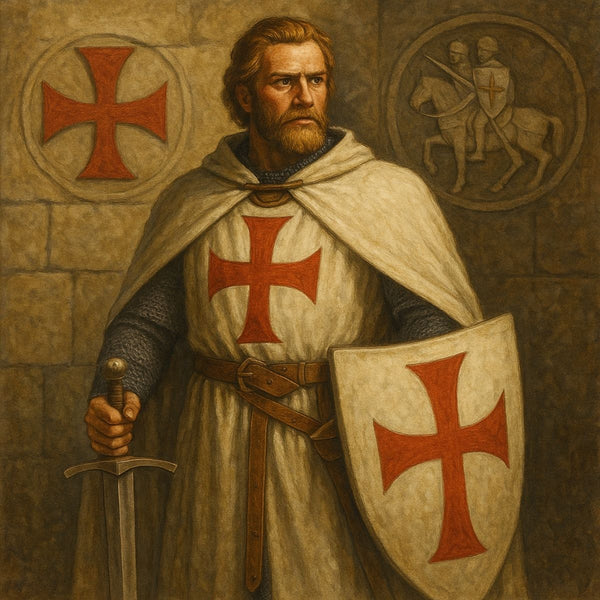
This bold, antique-style ring carries the iconic red cross of the Knights Templar—a symbol once stitched into tunics and carved into stone by a brotherhood that vowed to protect the sacred. Today, it’s reborn as a powerful charm of personal courage, resilience, and quiet authority.

Whether worn for its medieval roots or its modern symbolism, this piece stands for something greater than fashion. It’s for those who feel drawn to mystery, justice, or the unseen forces that guide us.

Rooted in the vows of a sacred order

The Poor Fellow-Soldiers of Christ and of the Temple of Solomon—better known as the Knights Templar—were more than medieval warriors. They were guardians of pilgrims, protectors of relics, and keepers of sacred knowledge. Their red cross became a mark of devotion, often believed to offer divine protection.

In medieval times, such rings might be worn by those pledging loyalty or seeking spiritual shelter. Some even believed the cross held power against misfortune and evil spirits. Worn on the right hand, it was said to strengthen resolve. On the left, to shield the heart.

For those who walk their own sacred path

In today’s world, we still seek symbols that anchor us. The Templar cross ring isn’t just a nod to history—it’s a quiet reminder of strength, loyalty, and sacred intent. It speaks to the part of you that values truth, stands firm under pressure, and feels called to protect what matters.

It can be your grounding talisman when making hard decisions. A gift to someone entering a new chapter. Or a subtle reminder that you carry more purpose than the world sees.

How to invite its power into your life

– Wear it when you need courage in the face of uncertainty
– Place it on your altar, desk, or bookshelf as a focus for resilience
– Gift it to someone who holds your trust and loyalty
– Pair it with a handwritten intention or prayer under the moonlight

Some keep it close for confidence. Others wear it as a quiet rebellion against the chaos of the modern world. However it finds you, this ring carries a story—and it becomes part of yours.

Crafted with care, steeped in meaning

Every ring arrives ready to gift or keep, packaged with intention. The vintage-style detailing brings a weathered, authentic look, while the materials are selected for comfort and durability. The red enamel cross is bold yet elegant—just as it should be.

We know you might wonder…

FAQs

What does this ring actually do?

It’s a symbolic piece, often worn as a charm of protection, purpose, and strength—especially for those who resonate with the values of the Templars.

Can I wear it every day?

Yes, absolutely. It’s designed to be both meaningful and wearable, whether for everyday strength or special moments.

Is this based on real history?

Yes. The red Templar cross was a real symbol worn by the medieval Knights Templar, a military and spiritual order with deep roots in crusader history.

Read Also

See all Knights Templar
Templars in the Crusades: Faith, Fury, and Fortresses
  • Posted on
Templars in the Crusades: Faith, Fury, and Fortresses
The Knights Templar, formed in 1119, arose during the Crusades to protect Christian pilgrims in the Holy Land. They combined monastic life with military prowess, becoming a formidable force. Despite their eventual decline due to accusations and suppression in the early 1300s, their legacy continues to fascinate through history and architecture.
Who Were the Knights Templar?
  • Posted on
Who Were the Knights Templar?
The Knights Templar, founded in the 12th century to protect pilgrims, rose to power through military might and banking. Their downfall began in the 14th century, culminating in their dissolution and persecution led by King Philip IV. Despite their destruction, Templar legends endure, captivating modern fascination with myths of treasure and hidden knowledge.
Templar Castles in Britain: Strongholds of a Vanished Order
  • Posted on
Templar Castles in Britain: Strongholds of a Vanished Order
The Knights Templar, formed in 1119, established crucial preceptories across Britain, supporting their Holy Land operations through agriculture and finance. Key sites include Temple Church, Temple Bruer, and Garway Church, each with unique histories. Despite their dissolution in 1312, the Templars' legacy continues to captivate and intrigue today.
Inside the Life of a Templar Knight: Daily Rituals and Rules
  • Posted on
Inside the Life of a Templar Knight: Daily Rituals and Rules
What was it really like to live as one of the most feared, revered, and mysterious warrior-monks of the medieval world? Far from the glamorised imagery of sword-wielding crusaders, inside the life of a Templar Knight was deeply regimented—anchored in prayer, obedience, and martial discipline. Let’s step inside the sacred and secretive world of the Poor Fellow-Soldiers of Christ and of the Temple of Solomon. Early Morning: Rise, Pray, Obey The Templars began each day before dawn. Life was structured around eight canonical hours, and Matins, the night vigil, started around 2 a.m. Inside the life of a Templar Knight, by first light, the brothers would already have been awake for hours, absorbed in prayer and chant. After Lauds, they gathered silently in the chapel—humble, uniform, heads bowed—not as individual warriors, but as a singular, disciplined order. Silence was sacred. Talking was restricted, and gestures or signs were often used instead. This was not a life of idle chatter but of spiritual warfare and submission to the divine. The Templar Code: Discipline Over Comfort Templars followed the Latin Rule, a strict code of conduct originally written by Bernard of Clairvaux. There were over 600 rules covering everything from mealtime etiquette to how to wear their white mantles with the iconic red cross. The Rule demanded: Celibacy and a rejection of all worldly pleasures. Communal living, sharing all possessions. Absolute obedience to superiors. No personal letters, gifts, or even pets. Each knight took vows of poverty, chastity, and obedience, mirroring monastic life. Inside the life of a Templar Knight, unlike traditional monks, Templars were also elite fighters. Training and Combat: Monks with Swords Despite their spiritual focus, the Templars were among the most formidable fighting forces of the Crusades. They trained rigorously—riding, swordsmanship, tactics, and physical conditioning were part of the daily grind. When not engaged in battle, knights often worked to maintain weapons, armour, and horses, preparing mentally and physically for the next command. But warfare was not glorified—it was a duty, not a thrill. Inside the life of a Templar Knight, the Templars believed they were fighting for God, and their souls were at stake with every decision. Meals: Frugal but Functional Templars ate two meals a day. Food was simple—bread, vegetables, and wine were staples. Meat was limited and could only be eaten a few times a week, often only by the sick or elderly. Meals were taken in silence, with one brother reading aloud from scripture or the Rule. They ate in refectory halls, seated side by side, reminded always that nourishment was functional, not indulgent. Brotherhood and Hierarchy Templars were divided into ranks: Knight Brothers – noble-born warriors, dressed in the white mantle. Sergeant Brothers – non-noble members, often supporting logistics and fighting as cavalry or infantry. Chaplains – spiritual leaders responsible for religious rites. Servants and Squires – assisted the order but were not full members. Despite the hierarchy, there was a strong sense of unity and fraternity. Inside the life of a Templar Knight, the Order functioned like a military monastic machine, where loyalty to the mission superseded personal ambition. Evening: Prayer, Reflection, and Humility After Compline (night prayers), Templars would retire to simple dormitories—shared quarters with strict rules. Beds were modest, and clothing was often kept on in case of an emergency. Before sleep, they were reminded of mortality, sin, and duty. If a brother broke a rule, punishment could include public confession, fasting, or flogging. Discipline was key to keeping the Order morally pure and spiritually strong. Why Did They Live This Way? To modern minds, the life of a Templar Knight may seem harsh or even joyless. But to those within the Order, it was a life of purpose, clarity, and divine mission. Inside the life of a Templar Knight, each rule, each ritual, was a way to transcend the self and serve something eternal. Legacy: The Myth and the Man Today, the Templars are wrapped in layers of legend—treasure hunters, secret keepers, or even the root of Freemasonry. But behind the myths was a brotherhood of warrior-monks who lived by strict discipline, served with unwavering devotion, and reshaped the medieval world.    
The Fall of the Templars: Trials, Torture and the Friday the 13th Curse
  • Posted on
The Fall of the Templars: Trials, Torture and the Friday the 13th Curse
The downfall of the Knights Templar, initially noble crusaders, marked a significant moment in medieval history entwined with betrayal and superstition. Arrested on Friday, October 13, 1307, under fabricated charges, their demise led to legends of curse and injustice, intertwining their legacy with the infamous date synonymous with misfortune.