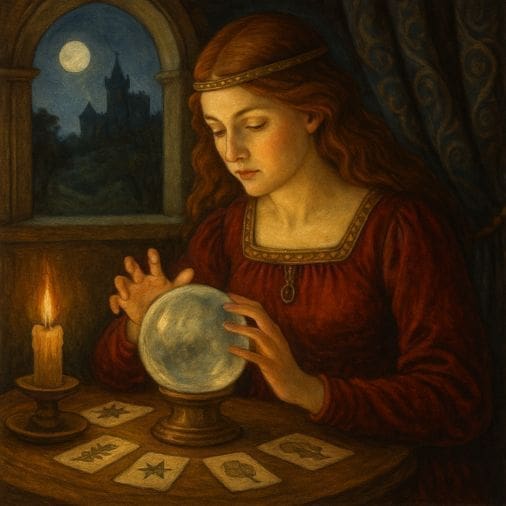
A young woman in a red dress gazes into a glowing crystal ball, surrounded by tarot cards and a lit candle—an enchanting scene of Fortune Telling and Divination in the Middle Ages, with a moonlit castle visible through the window behind her.

Fortune Telling and Divination in the Middle Ages

In the Middle Ages, people sought answers amid uncertainty through divination, blending pagan and Christian beliefs despite Church condemnation. Common methods included astrology, scrying, and interpretation of dreams. Halloween served as a significant time for fortune-telling, which fostered community bonds. Today’s traditions echo these ancient practices, highlighting humanity’s enduring curiosity about the future.

Fortune Telling and Divination in the Middle Ages Read Post »

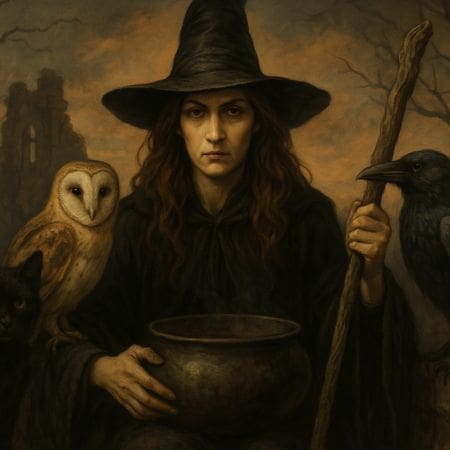
A serious-faced witch in a black hat holds a cauldron and staff, with a black cat, an owl, and a raven beside her. Amid old ruins and leafless trees, the dark, mystical scene evokes the essence of witchcraft in the Middle Ages.

Witchcraft in the Middle Ages: Myths, Fears, and Trials

The medieval perception of witches combined fear and fascination, influencing law, religion, and folklore. Initially viewed as harmless, beliefs shifted towards associating witchcraft with the Devil. This led to trials, particularly targeting women. The enduring symbols of witchcraft reflect deep-rooted cultural anxieties, ultimately transforming into modern curiosities linked to empowerment and Halloween celebrations.

Witchcraft in the Middle Ages: Myths, Fears, and Trials Read Post »

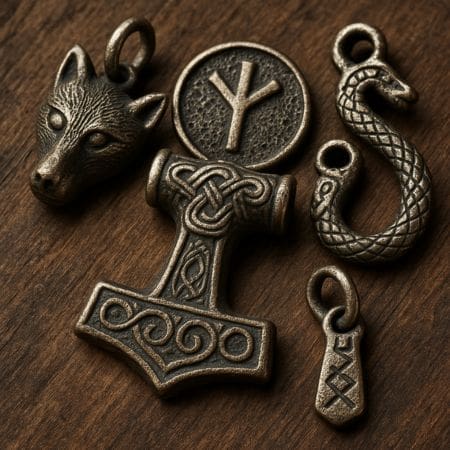
Five bronze Viking-style pendants on a wooden surface, including a wolf head, Thor’s hammer, a circular rune, a serpent, and a small rectangular tag with runic symbols—classic Viking amulets believed to offer protection and echo Norse mythology.

The Magic of Viking Amulets: Protection, Power, and Mythology

A timeless fascination with amulets Across history, people have worn objects for more than beauty. Amulets carried meaning, power, and deep belief. For the Vikings, these charms were essential to life. They were not simple trinkets but powerful symbols of protection, courage, and faith. Today, Viking amulets continue to intrigue collectors, historians, and those drawn

The Magic of Viking Amulets: Protection, Power, and Mythology Read Post »

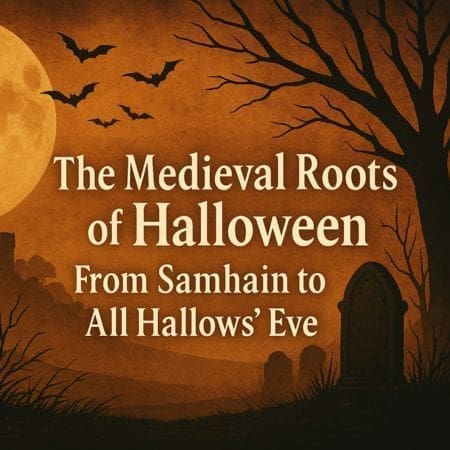
Silhouettes of bats, a tree, a gravestone, and a large moon create a spooky scene. Text reads: Discover the Mediaeval Roots of Hallowe’en—unveiling the journey from Samhain to All Hallows’ Eve.

The Medieval Roots of Halloween: From Samhain to All Hallows’ Eve

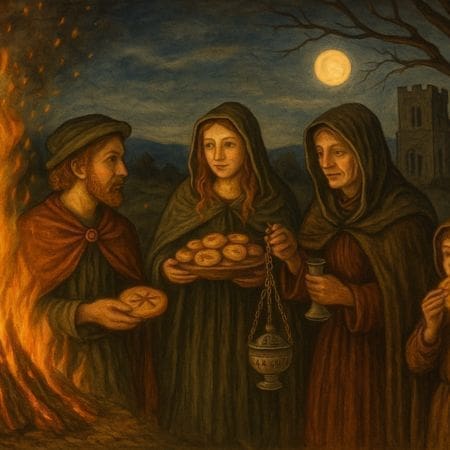
Halloween’s roots trace back to medieval Europe, originating from the Celtic festival Samhain. This time honored the dead and included rituals like bonfires and prayers. Blending pagan and Christian customs, it fostered community, fear, and celebration. Modern Halloween traditions can be linked to these historical practices, highlighting our ongoing connection to the past.

The Medieval Roots of Halloween: From Samhain to All Hallows’ Eve Read Post »

Privacy settings
Scroll to Top
Secret Link